
Conservation Development Foundation Nepal
- Email : info@codefundnepal.org.np
- Phone : +977-1-5100107
Conservation Development Foundation Nepal
At the heart of CODEFUND’s mission is the protection of Nepal’s unique mountain biodiversity. all Ecosystem andSpecies Conservation. Nepal’s high-altitude landscapes, from the Himalayan peaks to the trans-Himalayan plateaus, host globally significant species such as the snow leopard, red panda, and Himalayan wolf, which serve as vital indicators of ecosystem health. These landscapes are also rich in floral diversity, harboring over 6,500 species of flowering plants, including rare medicinal herbs like Yarsagumba (Ophiocordyceps sinensis), Jatamansi (Nardostachys jatamansi), and Panch Aule (Dactylorhiza hatagirea), species that hold immense ecological, cultural, and economic value for mountain communities. Equally remarkable are the forests draped in epiphytes orchids, ferns, mosses, and lichens that cling to trees and rocks, forming miniature ecosystems that support pollinators, retain moisture, and serve as sensitive indicators of forest health and climate change. CODEFUND recognizes that these fragile ecosystems extend beyond protected areas, requiring integrated approaches that combine rigorous scientific research with community stewardship. Our work focuses on generating evidence-based knowledge through camera trapping, genetic sampling, and prey assessments while simultaneously empowering local communities, the true guardians of these landscapes, through environmental education and capacity building. We are also actively strengthening governance frameworks for wetlands and high-altitude ecosystems, advocating for policies that ensure sustainable management of natural resources, both flora and fauna, for the prosperity and resilience of nature and people alike.
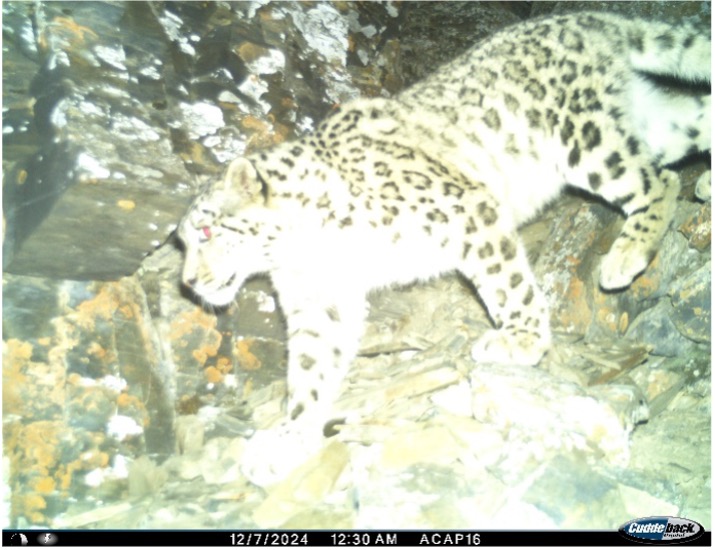
As apex predators and keystone species, snow leopards play a crucial role in maintaining the e @cological balance of Nepal’s high-altitude ecosystems, which span three major conservation landscapes, Eastern, Central, and Western, and hold approximately 7-8% of the global snow leopard population. With a recent national estimate of 397 individuals (95% CI: 331–476) , Nepal’s snow leopards are vital indicators of ecosystem health, and nearly 42% of their habitat exists outside protected areas, making community engagement essential for their survival and the preservation of alpine biodiversity.
Dr. Bikram Shrestha leads research initiatives to conserve ecosystem and species Conservation. His work integrates rigorous scientific research, community participation, and conservation education to generate knowledge that supports evidence-based management including sustainable livelihoods in the mountain ecosystems.
On the behalf of the CzechGlobe of Czech Academy of Sciences, Dr. Shrestha led snow leopard research in the Manaslu Conservation Area (2021–2022), conducting extensive camera-trap surveys, prey assessments, genetic scat sampling and studies on human-snow leopard conflict. These efforts have generated important ecological information for improving the conservation of snow leopards and their habitats.
With support from the Pallas’s Cat International Conservation Alliance (PICA), Dr. Shrestha expanded research on the globally threatened Pallas’s cat across the Manaslu Conservation Area, Annapurna Conservation Area, and Shey Phoksundo National Park. Camera-trap surveys recorded a remarkable assemblage of Himalayan carnivores, including snow leopards, Himalayan wolves, Pallas’s cats, Eurasian lynx, and red foxes, providing valuable baseline data for future conservation planning. Fieldwork in Dolpa was conducted with the support of local conservationists Gopal Khanal and Temba Gurung. To better understand threats facing rare mountain carnivores, Dr. Shrestha also carried out the first PICA-standardized assessment of Pallas’s cat mortality in Samagaun and Samdo villages of Nubri Valley, identifying major causes of mortality and informing future conservation interventions.
Recognizing that successful conservation depends on local communities, Dr. Shrestha has led environmental education programs in schools throughout the Manaslu Conservation Area, Upper Manang of the Annapurna Conservation Area and Schools of Pokhara Metropolitan city. More than 600 students, teachers, and local government representatives participated in interactive presentations and conservation competitions featuring essays, poems, and artwork that promoted stewardship of snow leopards and Pallas’s cats.
Epiphytic orchids are specialized forest organisms that complete their life cycle on trees without obtaining nutrients from their hosts. They depend on host trees for support and microhabitats provided by bark characteristics, making them important indicators of forest health. However, habitat degradation, fragmentation, climate change, poaching, and overharvesting threaten orchid populations worldwide.
Though 70–75% of orchid species are epiphytes, their ecological requirements remain poorly understood, particularly in Nepal’s eastern Himalayas. Epiphytic orchids exhibit non-random host selection influenced by host-tree traits, bark characteristics, canopy structure, and microclimate. Nepal harbors over 500 orchid species, with more than two-thirds being epiphytic, underscoring its conservation importance.
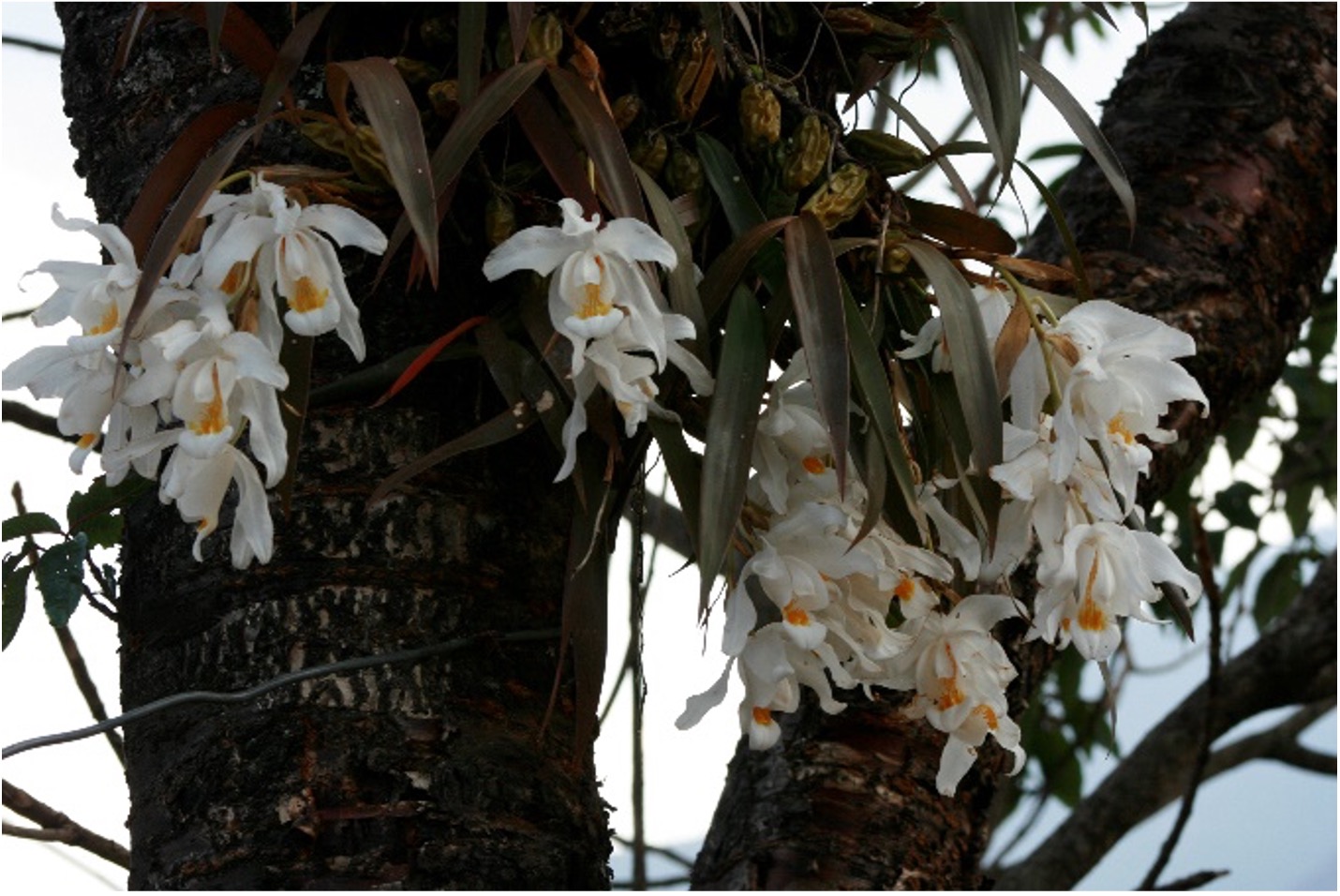
Despite previous studies on orchid diversity and host associations, ecological mechanisms governing epiphytic orchid communities in Gaurishankar Conservation Area remain unexplored. This study integrates meta-community ecology and ethnobotanical approaches to investigate orchid distribution, host preference, environmental drivers, and traditional knowledge, providing scientific evidence for climate-resilient and community-based conservation in the eastern Himalayas.
CODEFUND, as the host institution, supported this program under the Rufford Grant 2026. The team includes Ms. Sami Shrestha (PI, PhD Candidate) and Dr. Bikram Shrestha (Project Advisor/Co-Supervisor).
Nepal boasts an extraordinary diversity of herpetofauna, with over 200 recorded species of amphibians(57 species) and reptiles (143 species) distributed across a dramatic altitudinal gradient, from the steamy lowlands of the Terai to the frigid heights of the Himalayas (Rai et al. 2022). This assemblage encompasses frogs, toads, salamanders, lizards, snakes, turtles, and crocodilians. The richness of this fauna is particularly pronounced within protected areas; the Annapurna Conservation Area alone harbors 91 species (30 amphibians and 61 reptiles), including eight endemics, while Chitwan National Park supports 89 species (20 amphibians and 69 reptiles). Among the country’s amphibian endemics are Scutiger nepalensis, Scutiger ghunsa, Nanorana rarica, and Amolops nepalicus.
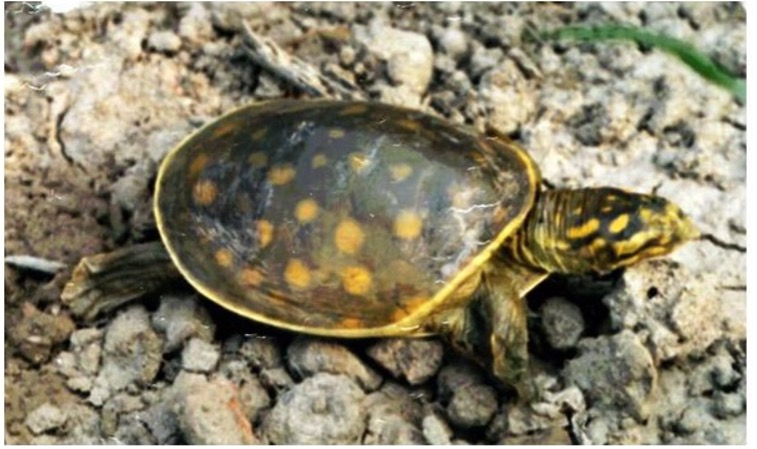
However, the conservation outlook for Nepal’s herpetofauna is increasingly concerning. In the Annapurna region, six species are globally classified as Vulnerable, among them the King Cobra (Ophiophagus hannah) and Burmese Python (Python bivittatus). Chitwan National Park’s reptile community alone comprises three Critically Endangered, five Endangered, six Vulnerable, and four Near Threatened species. Among chelonians, the Critically Endangered Elongated Tortoise (Indotestudo elongata) confronts severe pressures from habitat loss, hunting, and illicit trade, while the Spotted Pond Turtle (Geoclemys hamiltonii) and Peacock Softshell Turtle (Nilssonia hurum) are listed as Endangered. The Indian Flapshell Turtle (Lissemys punctata), the focal species of CODEFUND’s Badhaiya Tal project, is categorized as Vulnerable. Across Nepal’s landscapes, Critically Endangered reptiles also include the Gharial (Gavialis gangeticus) and several other turtle species.
The principal drivers of this decline are manifold: habitat degradation resulting from agricultural expansion, urbanization, and wetland encroachment; chemical pollution; unsustainable fishing methods; and the burgeoning illegal wildlife trade. The Terai region, which hosts the highest concentration of threatened reptiles, has witnessed substantial human population growth that exacerbates these pressures. Meanwhile, many endemic amphibian species in the mid-hills and highlands remain acutely vulnerable to habitat loss and the impacts of climate change.
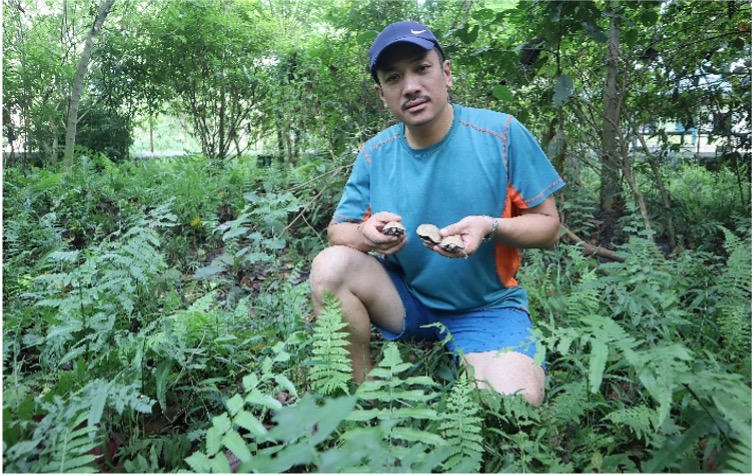
CODEFUND is committed to confronting these challenges through scientifically rigorous and community-embedded interventions. Guided by Prof. Dr. Kalu Ram Rai, a preeminent herpetologist from Tribhuvan University, whose decades of research have shaped the field in Nepal. Complementing this academic stewardship is Mr. Tapil Prakash Rai, an accomplished environmentalist, whose hands-on experience as Lead Keeper of the Turtle Rescue and Conservation Centre in Jhapa includes the successful captive breeding of the Critically Endangered Elongated Tortoise. Their extensive field engagement, spanning rescue operations to community outreach across eastern Nepal, effectively bridges the gap between scholarly inquiry and practical conservation delivery.